One Rabbit, Ten Income Streams: Learning to See the Whole System
One of the biggest mistakes people make when they start thinking about homesteading, off-grid living, or building income streams is looking at a thing and asking only one question:
“What can I sell?”
A better question is:
“What else can this become?”
The difference between those two questions can be the difference between a hobby and a business.
Let’s use a rabbit as an example.
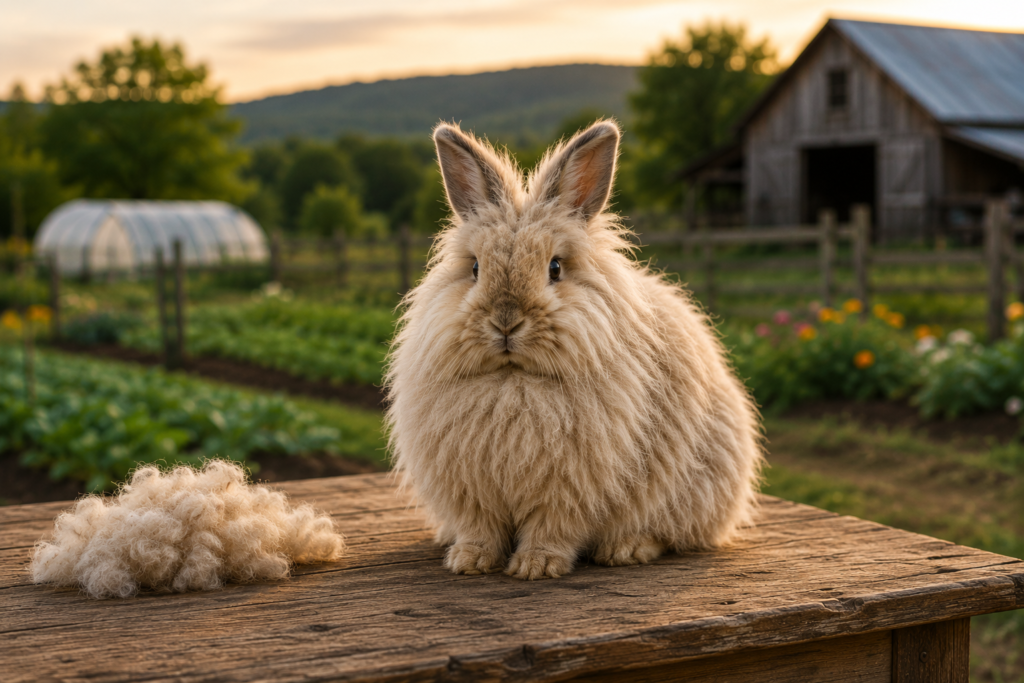
Most people see a rabbit and think of one product. Maybe it’s a pet. Maybe it’s wool from an Angora rabbit. Maybe it’s breeding stock.
An entrepreneur sees something different.
The entrepreneur asks how many products and services can come from the same system.
An Angora rabbit can produce wool. That wool can be sold raw. It can be washed and sold for more. It can be spun into yarn and sold for even more. The yarn can become hats, scarves, mittens, or other handmade products.
The rabbit itself may produce offspring that can be sold as pets or breeding stock.
Then there is the manure.
Most people stop there.
The entrepreneur keeps looking.
Rabbit manure can be sold directly to gardeners. It can also be fed to worms. Those worms can be sold to fishermen, gardeners, schools, and homesteaders. The worms produce castings. The castings can be bagged and sold as fertilizer. The castings can also be used to grow seedlings that are sold at a farmer’s market.
The same rabbit that started as one product has now become several.
Not because we worked harder.
Because we learned to see the whole system.
Years ago, I remember hearing about a woman who raised quail. She collected the droppings, sealed them in clear resin, and made earrings and necklaces. People bought them.
Now, were they buying bird droppings?
Not really.
They were buying a story.
That’s another lesson many people miss.
Sometimes the story is worth as much as the product.
The same thing happens with barnwood furniture, horseshoe art, reclaimed lumber, and hand-forged tools. The materials are only part of what people are paying for.
They’re paying for the story.
Homesteading and off-grid living work the same way.
A blueberry bush isn’t just a blueberry bush.
It’s fresh berries.
It’s frozen berries.
It’s jam.
It’s syrup.
It’s rooted cuttings.
It’s nursery stock.
It’s a U-pick experience.
It’s a workshop teaching others how to grow blueberries.
One asset. Multiple streams.
A worm bin isn’t just worms.
It’s composting services.
It’s castings.
It’s worm tea.
It’s fishing bait.
It’s starter kits.
It’s classes.
One asset. Multiple streams.
The goal isn’t to chase twenty different businesses.
The goal is to build one good system and then ask:
“What else can this become?”
That question applies whether you’re raising rabbits, growing blueberries, operating a laser engraver, running a 3D printer, keeping bees, or building furniture.
The strongest homesteads don’t depend on one crop.
The strongest off-grid systems don’t depend on one source of power.
And the strongest cash-flow plans don’t depend on one source of income.
Learn to see the whole system.
Learn to see the whole rabbit.
Learn to see what is already in your hand.
You may discover there is more opportunity there than you ever imagined.