One of the easiest traps in homesteading and off-grid living is thinking that every income stream has to come directly from agriculture.
It doesn’t.
Yes, food production matters. Gardens matter. Chickens matter. Orchards, berries, herbs, and value-added products absolutely matter.
But cash flow on a homestead often comes from something broader:
learning how to build systems that work together.
That might mean farming.
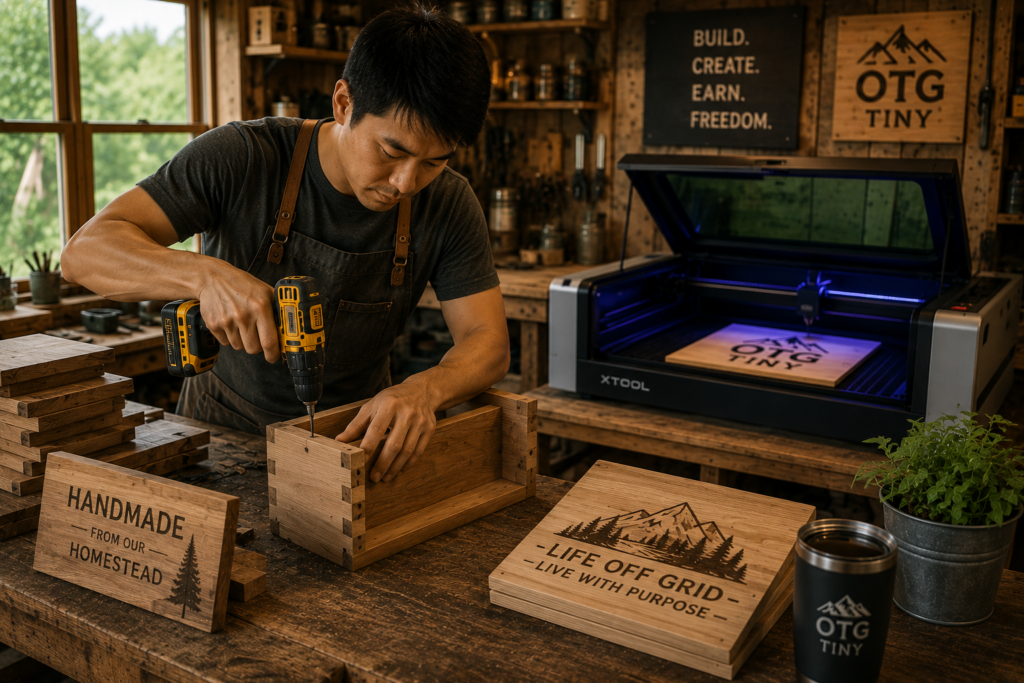
Or it might mean building trellises in a workshop.
It might mean laser engraving signs, 3D printing parts, welding trailers, repairing equipment, running a tiny campground, sharpening chainsaws, making soap, creating digital products online, or renting out a small cabin on Airbnb.
The important question becomes:
“What systems can this property support?”
That’s where homesteading and cash flow begin overlapping with energy planning in a very real way.
Because every income-producing activity has resource requirements.
A freeze dryer pulls power.
A welder pulls power.
A woodworking shop pulls power.
A laser engraver pulls power.
An Airbnb guest may run the mini-split colder than you ever would yourself.
And this is where people sometimes get into trouble with off-grid or hybrid energy systems.
They size the system for their current lifestyle, not for the business or future cash flow they hope to create later.
That can become an expensive mistake.
Plan the System Before You Need It
One of the smartest things you can do when building a homestead or off-grid property is thinking ahead about what the site may eventually become.
Maybe today it’s just:
- lights
- a refrigerator
- internet
- a small mini-split
- a few outlets
But what happens two years from now when:
- you add a workshop
- start woodworking
- buy a freeze dryer
- add refrigeration for products
- install a well pump
- begin hosting guests
- add electric fencing
- run irrigation
- build a tiny rental cottage
Suddenly the energy demand changes dramatically.
And some loads aren’t just about wattage.
They’re about startup surge.
A small air compressor might run on modest wattage once operating, but the startup surge can be several times higher. Mini-splits, pumps, refrigerators, freezers, air compressors, and shop tools all have startup characteristics that matter when sizing inverters and generators.
That’s where concepts like lock rotor amps start becoming important.
An inverter may technically handle the running load but still struggle during startup if surge capacity wasn’t planned correctly.
That’s one reason why “making hay while the sun shines” matters so much in off-grid living.
Heavy loads should often run when solar production is strongest.
Run the freeze dryer during peak solar hours.
Charge batteries during the day.
Do woodworking when production is high.
Pump water when sunlight is abundant.
Instead of fighting the system, you learn to work with it.
That mindset shift alone can dramatically reduce the size and cost of the system required.
Not Every Product Comes From the Garden
One of the beautiful things about homesteading is that it allows creativity.
A person with basic woodworking skills may create:
- trellises
- raised garden beds
- rustic signs
- shelves
- outdoor furniture
- chicken coops
- farm stand displays
A person with a 3D printer may create:
- irrigation adapters
- tool holders
- seed spacers
- custom solar wire clips
- replacement knobs
- homestead gadgets
- niche repair parts
Someone else may run:
- online consulting
- bookkeeping
- CAD drafting
- remote technical support
- website services
- digital design work
- online classes
That’s still homesteading.
Cash flow does not have to smell like manure to count.
The point is building systems that create resilience and independence.
Sometimes the most profitable thing on a homestead isn’t the tomatoes.
Sometimes it’s the person using the barn workshop to create handcrafted products while the tomatoes simply reduce grocery bills.
Airbnb and Tiny Rentals
Even hospitality can become part of the system.
A small cabin, tiny house, glamping tent, or off-grid cottage can create meaningful cash flow if done thoughtfully.
But again, systems planning matters.
Guests will not use energy the way you use energy.
You may carefully conserve power because you understand your system.
Guests often do not.
That means planning for:
- heavier air conditioning use
- longer showers
- phone charging
- hair dryers
- microwaves
- coffee makers
- electric cooking appliances
- outdoor lighting
- inconsistent behavior
If you are building an off-grid rental, size the system for the most energy-hungry guest, not your personal minimalist lifestyle.
Otherwise frustration comes quickly.
And honestly, redundancy matters too.
A backup generator may not feel glamorous, but a guest who loses power at midnight in July probably won’t leave a glowing review about “authentic off-grid realism.”
Reliability matters.
Multiple Small Systems Create Stability
One of the recurring themes in OTG Tiny is that resilience rarely comes from one giant solution.
It usually comes from many smaller systems working together.
A garden reduces food costs.
Solar reduces utility dependence.
A workshop creates products.
An Airbnb creates supplemental income.
A few fruit trees produce seasonal sales.
A website creates affiliate revenue.
A small side business fills gaps during slow seasons.
None of those things alone may fully replace a traditional income overnight.
But together they begin creating flexibility.
And flexibility is one of the real forms of freedom people are searching for in the first place.
That’s why thinking in systems matters so much.
Not just power systems.
Life systems.
Cash flow systems.
Skill systems.
Backup systems.
Because a healthy homestead isn’t usually built on one thing.
It’s built on many things quietly working together.