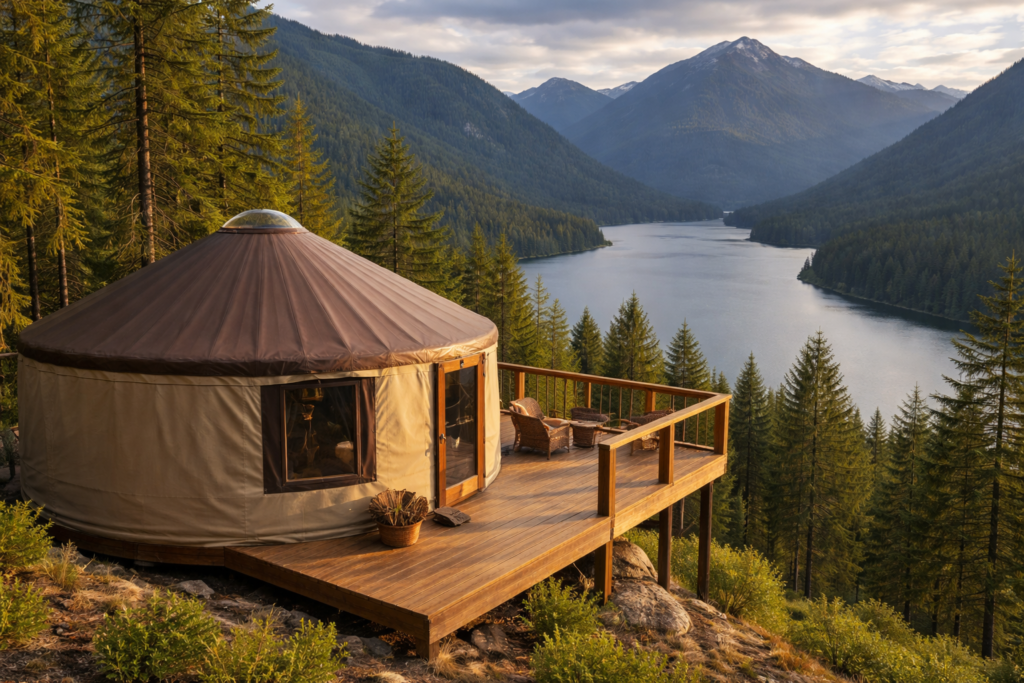
What Actually Works for Off-Grid Living
SHELTER
When people start thinking about living off-grid, the first question usually isn’t about solar panels or batteries.
It’s about the structure.
What are you actually going to live in?
Spend a little time online and you’ll see the same three ideas come up again and again: tiny houses, cabins, and yurts. Each one has its own appeal. Each one also comes with trade-offs.
The right choice isn’t always the one that looks best in photos. It’s the one that works with your land, your climate, and the systems that will support daily life.
Before deciding what to build, it helps to understand the strengths and weaknesses of each option.
Tiny Houses
Tiny houses became extremely popular over the last decade, largely because of television and social media. They promise a simpler life with less space, fewer possessions, and lower energy use.
And in some situations, they work very well.
A small structure takes less energy to heat and cool, and careful design can make even a small space feel comfortable and efficient.
But there’s an important detail many people overlook.
Most tiny houses you see online are not designed for true off-grid living. Many of them are built on trailers and intended for tiny house parks or RV-style communities where water, sewer, and electricity are already available.
Once you remove those hookups, things change.
Off-grid living means integrating water storage, solar power, batteries, heating systems, and other infrastructure directly into your living environment. Fitting all of that into a very small footprint often requires custom building.
Custom work can drive costs up quickly.
That doesn’t mean tiny houses can’t work off-grid. Many people live comfortably in them. Just understand that small spaces require thoughtful planning when they are expected to operate independently.
Cabins
For many people, the word cabin brings up a familiar image.
You head into the woods like Paul Bunyan, cut down a few trees, stack the logs, and build a beautiful log cabin in the forest.
It’s a powerful idea and part of the American imagination.
Sometimes it even works out that way.
But building a traditional log cabin from raw timber is much harder than most people expect. Cutting trees, shaping logs, notching joints, sealing gaps, and protecting the structure from weather requires skill and a tremendous amount of labor.
The romantic version and the practical version are not always the same thing.
Fortunately, cabins don’t have to be built from hand-cut logs to work well off-grid. A simple wood-framed cabin using conventional building materials can often be built faster and more predictably.
Small cabins also have another advantage. They leave room to grow.
Many off-grid homesteads start with a modest cabin and expand later once the owner understands the land better and has systems like water and power working reliably.
Cabins may not be flashy, but they are practical and proven.
Yurts
Yurts attract attention because they look different from conventional buildings. A circular structure in the woods has a certain appeal that square houses don’t always have.
They also offer one big advantage: speed.
Compared to building a full house, a yurt can often be assembled relatively quickly. For people who want to move onto their land sooner rather than later, that can be a major benefit.
Yurts also feel surprisingly spacious inside because of the open circular design.
But they come with compromises.
Insulation is usually less robust than in conventional buildings, and heating can become a daily concern in colder climates. Weather protection depends heavily on the quality of the materials and how well the structure is maintained.
Living in a yurt can be a rewarding experience, but it requires accepting some limitations.
Start With What You Can Finish
One common mistake people make when building off-grid shelter is assuming they will move into a temporary setup and improve it later.
In reality, once daily life begins inside a structure, progress slows down. Projects that seemed simple on paper become much harder when you are cooking, sleeping, and storing your belongings in the same space where construction is happening.
Most people don’t “fix it in post.”
Whatever you start with will probably be what you live with for quite a while.
That’s why it’s usually better to begin with something simple, practical, and finishable rather than something ambitious that may take years to complete.
Shelter Is Only One Piece of the Puzzle
Choosing a structure is important, but it’s only one part of successful off-grid living.
Land determines where you can build.
Shelter determines how you live.
Systems determine whether everything actually works.
Those three things — land, shelter, and systems — form the foundation of an off-grid life.
When they work together, the entire lifestyle becomes much easier.