
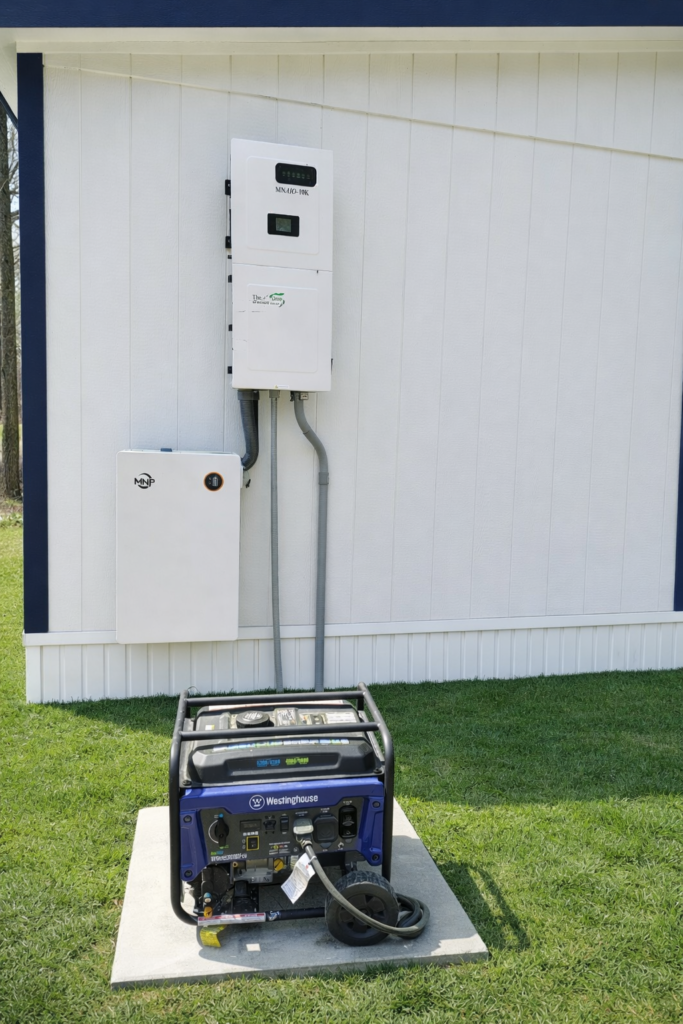
This is the exact off-grid setup I’m running right now—simple, compact, and built to actually work day to day.
If you walked onto my property right now, you wouldn’t see anything fancy.
You’d see a system that works.
No showroom. No perfect install. Just something that handles day-to-day life without me thinking about it all the time.
I’ve built a lot of systems over the years—some good, some I’d do differently—and what I’ve landed on is pretty simple:
Simple wins.
Not the cheapest. Not the biggest.
Simple, serviceable, and something you can actually live with.
This is what I’m running right now—and why.
The Heart of the System: MidNite Solar All-In-One
Everything starts with the inverter.
The inverter I’m running is a MidNite Solar all-in-one unit. I’ve used MidNite Solar gear for years—combiner boxes, surge protection, and other components—and they’ve consistently held up. It’s one of those brands I don’t have to think twice about recommending because I’ve seen it work in the field, not just on paper.
This particular unit is rated at about 11.4 kW continuous, with a short burst up to 20 kVA. In real life, that means I can run what I need without constantly thinking about it.
On the solar side, it’ll take up to 15,000 watts of PV, and it allows for oversizing. That matters more than people think. Panels don’t produce full power most of the time, so being able to oversize your array helps in the mornings, evenings, and winter when production drops off.
Efficiency is high—right around 98% from solar to AC—and mid-90s from battery to AC. You’re always going to lose a little power in conversion, but this keeps those losses low.
The MPPT range is wide, which gives flexibility in how you string your panels. And the transfer time is under 10 milliseconds, so when power shifts, you don’t even notice it.
What really makes this unit stand out is how much is built into it.
There’s a breaker panel right inside—three 15-amp circuits and one 20-amp circuit. For my tiny house, that was enough. I didn’t need a separate main panel. I just wired my four circuits directly into the inverter and was up and running.
It also has a built-in generator input, which every off-grid system should have whether you think you’ll need it or not. There’s a programmable breaker you can use for microinverters, a smart load, or just another circuit, and a full 100-amp output if you want to feed a subpanel later.
When you put all of that together—solar input, inverter, breaker panel, generator input—it becomes a compact system instead of a wall full of separate boxes.
That simplicity matters.
Battery Storage: MidNite MNPowerflo16 (16 kWh)
The inverter runs the system. The battery makes it livable.
For storage, I’m running a MidNite Solar MNPowerflo16. It’s a 16 kWh lithium iron phosphate battery, and for my setup, it landed right in the sweet spot.
Not oversized. Not undersized. Just right.
It gives me enough capacity to get through the night and handle normal daily use without overbuilding the system.
One of the reasons I went this route is how well it integrates with the inverter. It uses closed-loop communication over the Pylontech protocol, which means the inverter and battery actually talk to each other—charging, discharging, and protecting the system without me having to babysit it.
The install was straightforward. It’s a wall-mounted unit, and it’s basically plug-and-play. No dip switches, no complicated setup—connect the communications cable and it works.
It’s built with EVE cells and includes heating for colder weather, which is a big deal. Batteries don’t like the cold, and having heating built in keeps things operating when temperatures drop.
Monitoring is all in one place through the MidNite Pro app. I can see solar production, battery status, loads, and inverter performance without bouncing between different systems.
And when it comes to updates, MidNite handles both the inverter and battery together, so you don’t run into compatibility issues. It’s all tested and released as a system.
At the end of the day, I’m not interested in managing a science project—I want something that works. This does.
There are many places to get the Midnite Solar products. I like Backwoods solar
Backup Power: Westinghouse Dual Fuel Generator
And then there’s the part most people don’t think about until they need it.
For backup, I’m running a Westinghouse dual-fuel generator—right around the 5600–6500 watt range.
It’s not something I use often. And that’s exactly what you want.
In a good system, the generator is there for when things don’t go according to plan—long stretches of bad weather, heavy loads, or just catching the batteries back up.
I went with this one because it was inexpensive, easy to get, and it showed up at my door from Amazon without any hassle. It runs on gas or propane, which gives me some flexibility depending on what I have available.
It’s got a 30-amp outlet for tying into the system and a built-in CO sensor, which is one of those features you hope you never need—but it’s good to have.
There are higher-end generators out there, but for what I needed—something reliable that I don’t have to think about much—this one does the job.
If you’re running off-grid and don’t have a generator, you don’t have a complete system. You just haven’t needed it yet.
This is the same style generator I’m using.
Water: What I’m Doing Right Now
Power is one thing. Water is another.
Right now, I’m keeping it simple.
I’ve got a hand pump on my well, and I pump water into a 30-gallon tank. That’s what I’m working off of day to day.
No pressure system yet. No automation.
Just me, a pump, and a tank.
Could I put in a full powered system? Yes.
Will I? Also yes.
But that’s a time and money thing.
And one of the biggest mistakes I see people make is trying to build everything all at once. They end up stalled out or waiting months before anything actually works.
This works now.
And that matters.
The Bathhouse (Keeping It Separate)
And then there’s the part nobody talks about—but you deal with every day.
Instead of trying to cram everything into the tiny house, I’m building out a separate bathhouse.
It keeps moisture, smell, and complexity out of the main living space and makes the whole system easier to manage.
Right now, I’m using simple, practical solutions while I build toward a more permanent setup.
Joolca System (Simple, Works Right Away)
Joolca makes a couple of products that work well together if you’re just getting started.
The GottaGo is their toilet system, and the HOTTAP is a portable propane hot water heater.
Pair the two together and you’ve got a basic off-grid bathroom setup without having to build everything all at once.
The HOTTAP is simple—hook up water, hook up propane, and you’ve got hot water on demand.
The GottaGo gives you a flexible toilet setup that can run as a bag system or be pushed toward composting depending on how you want to manage it.
This isn’t a forever solution—but it’s a good way to get up and running fast.
You can check out Joolca systems here.
Small 12V System (What I Actually Use)
Not everything needs to be tied into the main system.
For the bathhouse, I kept it simple.
I’m using a small 12-volt, 20 amp-hour battery from Eco-Worthy and charging it with a folding solar table from GoSun.
That’s it.
No tying into the main inverter. No running extra circuits. Just a small, standalone setup that does what I need it to do.
It runs a small pump, lighting, and whatever else I need out there.
It’s not fancy. It’s just practical—and it works.
The link for gosun and Eco Worthy
Why I Built It This Way
This system isn’t the biggest. It’s not the most complex.
It’s just enough.
A lot of people try to build the perfect system on day one. They overspend, overbuild, and end up with something they don’t fully understand.
I’d rather have a system I can live with, troubleshoot, and expand later if I need to.
Want Help Figuring Yours Out?
If you’re trying to figure out your own setup, don’t start with equipment.
Start with what you actually need.
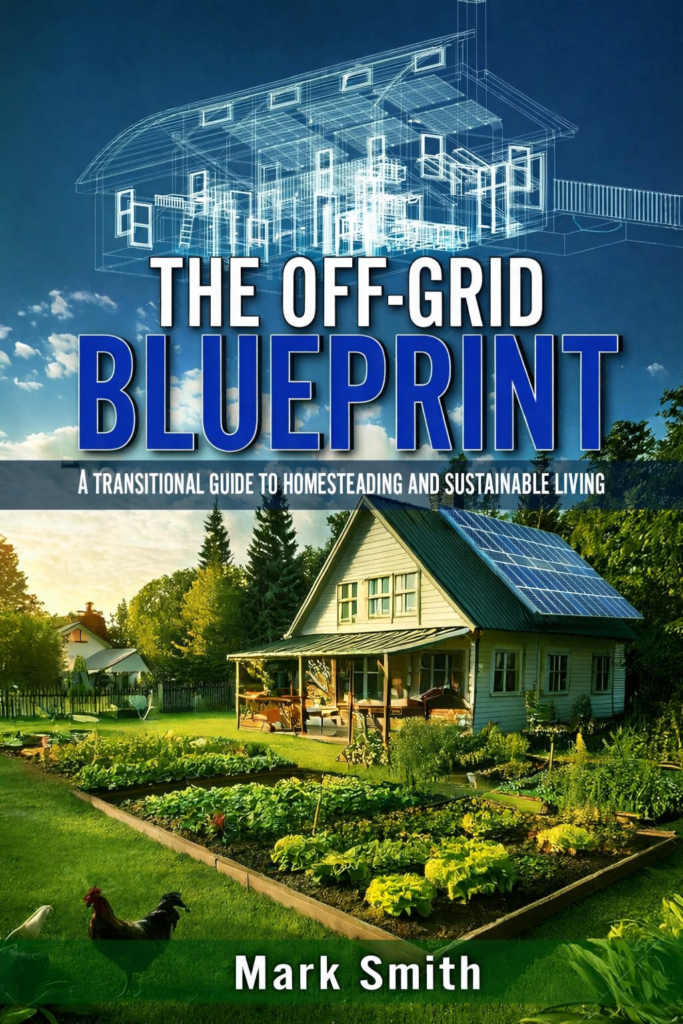
How If you’re trying to figure out your own setup, I wrote a guide that walks you through:
- how to size your system
- what actually matters (and what doesn’t)
- how to avoid expensive mistakes
What I Use (Simple List)
If you want to see the exact types of gear I’m using all in one place:
Final Thought
This isn’t the only way to build a system.
But it’s one that works.
It’s simple.
It’s compact.
And it does what I need it to do without turning into a full-time job.
And after doing this for a long time… that’s what matters.
If you want a simple way to think through your own system, I’ll send you the checklist I use.
👉 coming soon
Love that setup Mark. Simple and working NOW! You’ve got everything you need.
Thanks Mike I tried to KISS it. I find that works best and saves me headache.