
A colleague of mine, Greg Smith (no relation), author of The Battery-Powered Home: Foolproof Grid-Tied Lithium Storage, told me a story I’ve never forgotten.
He was at an event when someone walked up and asked him, out of nowhere:
“How much solar do I need?”
Greg looked at him and said:
“What color is your house?”
The guy just stood there, confused.
And that’s the point.
Because asking how much solar you need—without knowing anything about how you live—is about as useful as answering based on the color of your house.
Start Here Instead
Most people want to jump straight to panels, batteries, and system size.
But that’s not where this starts.
The real first question is:
How much energy are you actually going to use?
Solar doesn’t define your system.
Your lifestyle does.
If You’re On-Grid Right Now, You Already Have the Answer
Before you guess… before you estimate… before you price anything—
Go grab your electric bill.
That’s real data. That’s your life, measured.
Look at your monthly kWh usage.
Now do something simple:
Divide it by the number of days in the month.
That gives you a rough daily average.
It’s not perfect—but it’s honest.
And honest numbers are what you build a system on.
But Don’t Stop at the Average
Here’s where it gets interesting.
Look a little closer at your usage.
- Which months are higher?
- When does your usage spike?
- What’s happening during those times?
Because those peaks?
That’s when your system has to work the hardest.
Not on a mild spring day when nothing’s running.
But when:
- It’s hot and the AC won’t quit
- It’s cold and you’re heating
- The well pump is cycling
- You’re cooking, washing, living life
That’s your real demand.
This Is Where Most People Miss It
They design a system around averages.
But they live in the peaks.
And solar doesn’t care about your average.
It has to carry your load when things are actually happening.
Now Ask the Better Question
Once you’ve seen your usage, something usually clicks.
You start asking:
- Why is this month so high?
- What’s driving that spike?
- Do I really need that load?
And now you’re in the right mindset.
Not:
“How big of a system do I need?”
But:
“What can I reduce before I build anything?”
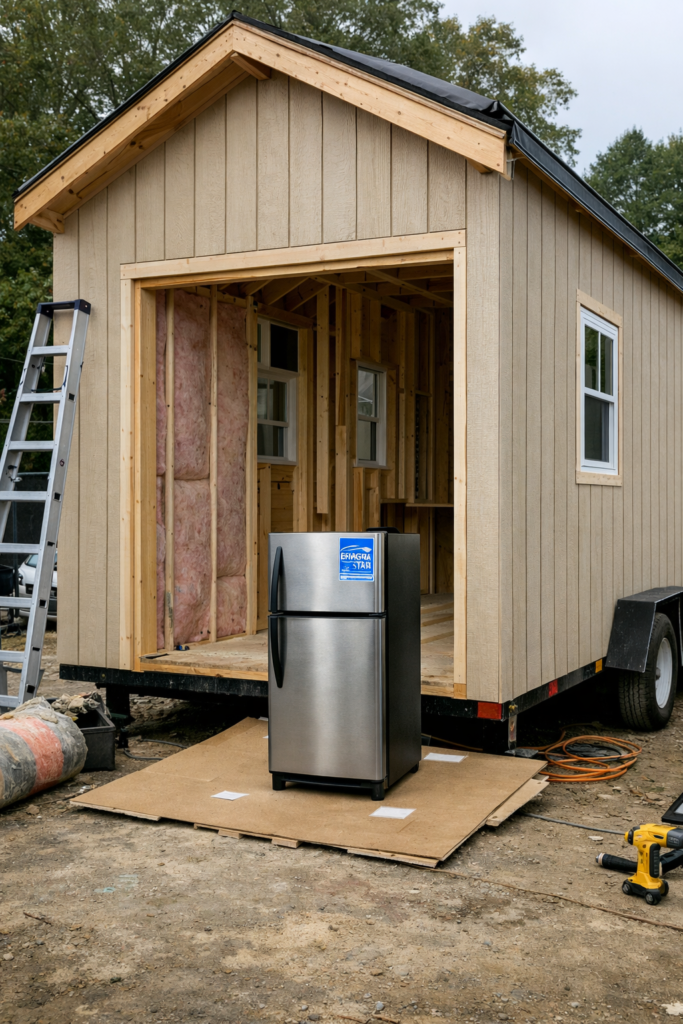
Before you spend money on solar, look at what you can tighten up.
- Better insulation
- Sealing air gaps
- More efficient appliances
- Switching from electric to propane where it makes sense
None of that is flashy.
But it works.
Every watt you don’t need is a watt you don’t have to produce, store, or pay for.
And that adds up fast.
When You Do This Right, Everything Changes
Now—now—you’re ready to think about solar.
Because you’ve done something most people skip:
You’ve defined your load.
You know:
- What you use
- When you use it
- Where your problems are
And that means you’re not guessing anymore.
This is where tools like PVWatts come in.
Not at the beginning.
After you know your numbers.
Now you can test:
- If I need ~8 kWh/day…
- What does a 4 kW system produce?
- What about 6 kW? 8 kW?
And more importantly:
What does it produce in winter?
If you want the full walkthrough, I’ve already broken it down here:
[How to Use PVWatts (Step-by-Step Guide)]
The Reality Check
Solar production isn’t steady.
- Summer gives you more than you need
- Winter reminds you who’s in charge
And this is the rule that matters:
Your system is only as good as your worst month.
If December doesn’t work—
Your system doesn’t work without help.
You’ve Got Three Levers
At this point, it’s not confusing anymore.
You’ve got three clear options:
- Add more solar
- Reduce your load
- Plan for generator use
Most real-world systems use a mix of all three.
That question—“How much solar do I need?”—
isn’t wrong.
It’s just early.
Because until you know how much energy you use…
The answer might as well be:
“What color is your house?”