If you start researching off-grid living or homesteading, you’ll quickly run into a confusing problem.
One book from the 70’s says you need five acres or more. You would see tons of diagrams and layouts like this.
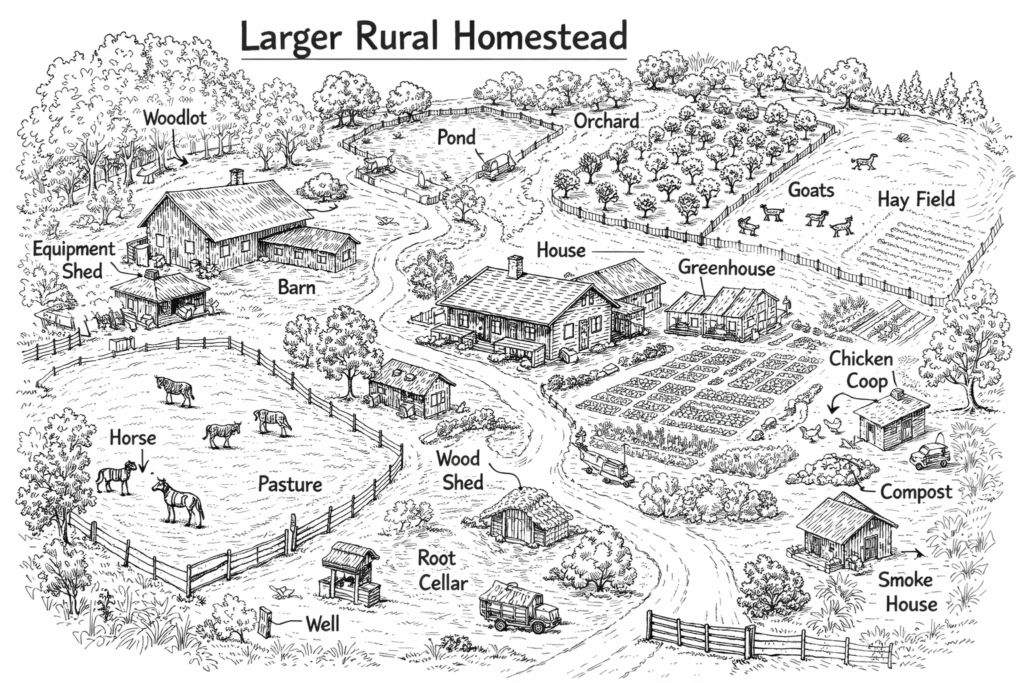
A traditional homestead usually includes more moving parts. A barn for equipment and animals, pasture for grazing, an orchard for fruit, and space for livestock all take room to function properly. Once you start adding those pieces together, the land requirement grows quickly. This is where properties in the five-acre range or larger often begin to make sense, depending on how many animals and how much food production you plan to support.
Another says one or two acres is enough Their images would be like this.
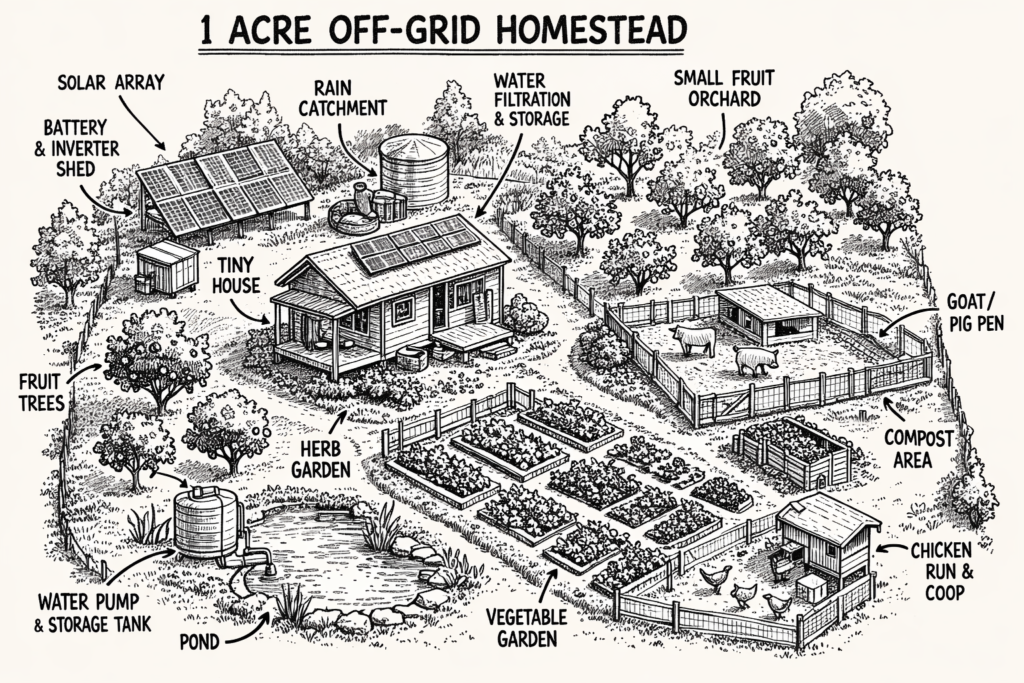
A well-planned acre can support a surprising amount of productivity. A small house, garden beds, fruit trees, poultry, and a few small livestock like goats or pigs can all coexist if the layout is efficient. With water collection, basic solar power, and careful planning, a one-acre homestead can provide food, energy, and a comfortable off-grid lifestyle without requiring large amounts of land.
Then you see YouTube videos claiming someone grows all their food and plenty of excess for the farmers market on a quarter acre in the city.
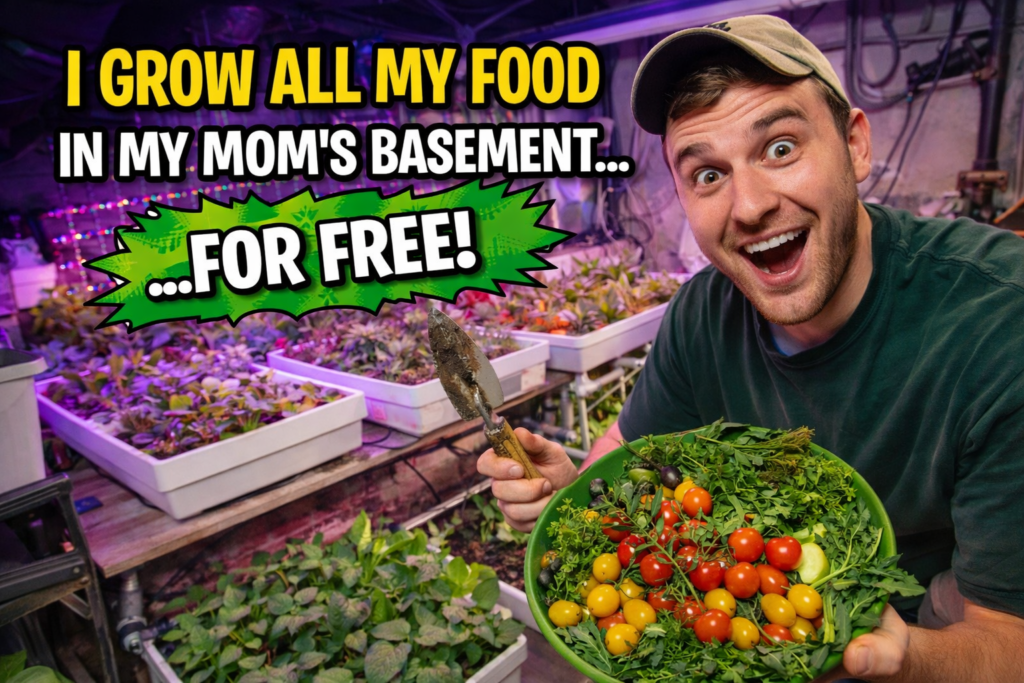
The internet can sometimes make it seem like you can grow all your food anywhere. There are plenty of videos showing impressive indoor gardens, hydroponic setups, and basement grow rooms that appear to produce endless baskets of vegetables. Some of them are genuinely interesting systems, but they can also leave the impression that food production is almost effortless if you just set up the right lights and equipment. In reality, every growing system has trade-offs. Space, energy, water, labor, and cost all play a role. The goal isn’t to chase the most impressive example you can find online, but to build a system that actually works for your land, your climate, and your life.
So which one is right?
The honest answer is that they can all be right, because they are talking about completely different lifestyles.
Books like Five Acres and Independence or the old Two-Acre Have-More Plan from early Mother Earth News were written for families who wanted to produce a large portion of their food and sometimes income from the land. That means orchards, gardens, animals, and room for pasture.
That kind of lifestyle naturally requires more land.
On the other end of the spectrum, you’ll find modern examples of people growing a lot of vegetables on very small pieces of land. Intensive gardening can produce impressive results, especially in warm climates with irrigation and long growing seasons.
But that type of production usually requires a lot of daily work and careful management.
And then there is a third group of people living off-grid who are mainly focused on energy independence and rural living, not producing all their food. They might have solar power, a well, a small house, and maybe a garden, but they still buy most of their food from town.
Those three lifestyles look very different on paper, which is why the land numbers vary so much.
The real question isn’t:
How much land do I need?
The real question is:
What kind of life do I want the land to support?
If you want privacy, a small home, and off-grid power, one or two acres might work perfectly.
If you want a large garden and a few animals, you may want more room.
If your goal is to produce most of your own food, the land requirements increase again.
Another factor that people sometimes overlook is what the surrounding area is likely to become in the future.
Is the nearby town expanding in your direction?
Across the country there have been numerous disputes between long-time farmers and new suburban neighbors. A family farm may have been there for generations, but once housing developments move in, suddenly the smell of livestock, early morning equipment noise, or farm activity becomes a point of conflict.
In many places those conflicts end up in zoning hearings, local ordinances, or court battles.
When you’re choosing land, it’s worth thinking about not just what the area looks like today, but what it might look like ten or twenty years from now.
A quiet rural property on the edge of a growing town can slowly turn into something very different.
This is why buying land should start with a plan.
Once you know what you actually want the land to do, the amount of land you need usually becomes much clearer.
And in many cases, people discover they don’t need nearly as much land as they first imagined.
They just need the right land with water, access, and workable local rules.