One of the first questions people ask when they start thinking about off-grid living is simple:
How much land do I need?
Most people assume the answer is “a lot.” Ten acres. Twenty acres. Maybe more.
But the truth is, the quality of the land matters far more than the number of acres.
A small property with good water, decent soil, and workable zoning can support a comfortable off-grid life. On the other hand, a large piece of land without water or access can turn into an expensive problem very quickly.
Before you start scrolling through land listings or walking properties with a real estate agent, it helps to slow down and think about what you actually need.
Start with the basics.
How many people are you planning for?
A single person living in a small cabin with a garden has very different land needs than a family trying to raise animals and grow a large portion of their food.
Then ask yourself another practical question:
What do you actually plan to do on the land?
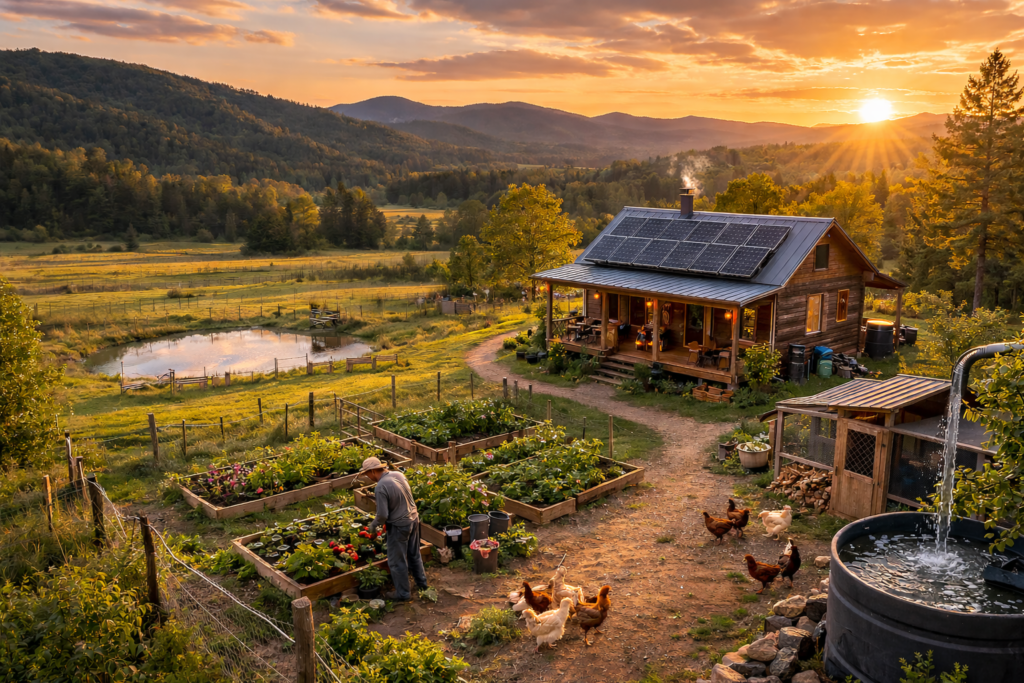
A lot of people picture livestock as part of the off-grid lifestyle. Chickens, goats, maybe a couple cows. That can absolutely work, but animals require real planning. They need fencing, shelter, food, water, and daily care.
And it’s worth asking yourself honestly:
Have you ever raised animals before?
Dogs don’t really count. Farm animals are a completely different responsibility.
Gardens can be the same way. A large garden sounds wonderful in theory, but when everything ripens at the same time you suddenly have more tomatoes, beans, or squash than you know what to do with. Growing food is rewarding, but it also takes time, effort, and some experience.
Another factor that doesn’t get talked about very often is your age and physical ability.
If you’re twenty-five and can throw fifty-pound bags of feed around without thinking about it, managing a few acres might not seem like a big deal.
If you’re fifty and the dad bod is starting to show up, things can feel a little different.
Hauling firewood, fixing fences, clearing brush, carrying water, maintaining buildings — these are all normal parts of rural living. Your health and physical ability will influence how much land you can realistically manage over time.
That doesn’t mean off-grid living is only for young people. It just means the property and the plan should match what you can comfortably maintain.
Then there’s the most important factor of all:
Water.
If you plan to raise animals or maintain a large garden, your water needs increase quickly. Wells, rain catchment systems, or springs need to be able to support those demands.
A small property with reliable water will almost always be more valuable than a large property where water is uncertain or extremely expensive to access.
There’s also one more practical consideration that people often forget when they are looking at acreage.
More land usually means more taxes.
That extra acreage might look appealing when you’re standing on the property, but it can also mean higher property taxes and more land that needs to be maintained year after year.
The biggest mistake people make is assuming that more land automatically means more freedom.
In reality, the right land — with water, access, sunlight, and reasonable local rules — is far more important than simply owning more acres.
For many people starting out, a well-chosen small property can support off-grid living perfectly well. If the fundamentals are in place, even a modest piece of land can provide everything needed for a successful off-grid life.
The key is not buying the biggest property you can afford.
The key is buying the right property for the life you actually plan to live.