Once people find a piece of land they like, the next dream usually starts forming pretty quickly.
They picture the home they want to build.
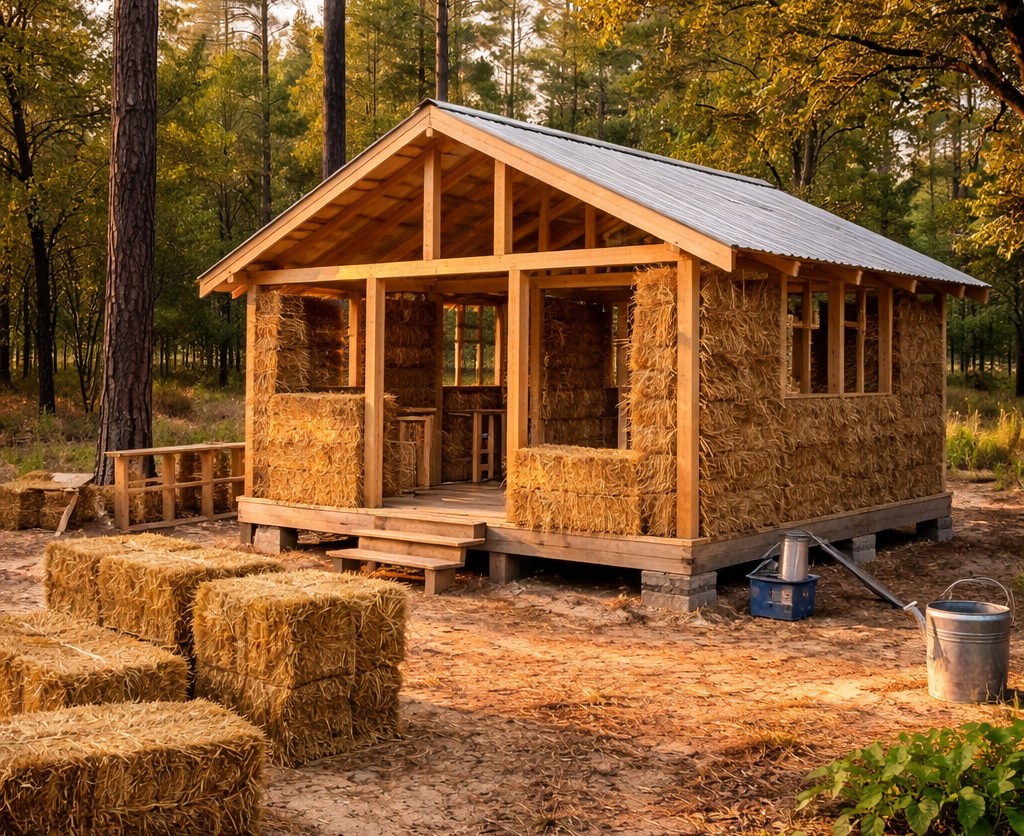
Maybe it’s a small cabin in the woods. Maybe it’s a yurt, a tiny house, or a strawbale home. Some people dream about building with earth and living in a cob or sod house. Others imagine a simple shed-style cabin with a metal roof and a porch. And of course there are still plenty of people who want to build a traditional house.
Throughout history, human beings have lived in all kinds of shelters.
Tipis.
Yurts.
Sod houses.
Strawbale homes.
Log cabins.
Stone cottages.
Even caves in some parts of the world.
People have used whatever materials and building styles made sense for their environment.
But before you start designing your dream off-grid home, there is one practical question that needs to be answered first.
Can you actually build it there?
This is where reality sometimes collides with the dream.
Different areas have different building codes, zoning regulations, and minimum housing requirements. Some counties are fairly flexible about alternative building methods, while others are much more restrictive.
For example, some places require a minimum square footage for any permanent residence. If your dream is a 400-square-foot tiny cabin, that may or may not be allowed depending on where the land is located.
Other areas regulate what types of structures are considered acceptable dwellings. A yurt, tiny house, or converted shed might be perfectly acceptable in one county but completely prohibited in another.
And then there are homeowners associations.
HOAs can be particularly difficult for anyone who wants to live a simple or unconventional lifestyle. Many HOAs have strict rules about what can be built, what materials can be used, and even what a property must look like from the road.
For someone who wants to build an off-grid cabin, an HOA can quickly become a nightmare.
Another common mistake people make is trusting a real estate listing that says something like “no restrictions.”
That phrase can be misleading.
Sometimes it simply means the property does not have private deed restrictions, but it may still be subject to county zoning regulations, building codes, septic requirements, or minimum dwelling sizes. Those rules still apply whether the listing mentions them or not.
The safest thing you can do before purchasing land is check the rules yourself.
Find out who the Authority Having Jurisdiction (AHJ) is for the property. In many places that will be the county planning department or building department. In some cases it may be a village or town office.
Give them a call or stop by in person and ask a few simple questions about what is allowed on that property.
Can you build a small cabin?
Is there a minimum square footage requirement?
Are alternative structures like yurts or tiny homes allowed?
What permits would be required?
Some people don’t like the idea of dealing with building departments or regulations. It can feel like unnecessary interference, especially for people who want to live independently.
But the reality is that it is far better to understand the rules before you buy or build.
Building something only to discover later that it violates local codes can become very expensive very quickly. In the worst cases, people have been forced to remove structures entirely after investing thousands of dollars in construction.
Even when the situation does not go that far, getting on the wrong side of the building department can bring extra scrutiny. Once that happens, inspectors and officials are far less likely to give flexibility or benefit of the doubt in the future.
A short conversation with the local authority before buying land can save enormous headaches later.
The goal here is not to discourage creativity or alternative building. Many off-grid homes are beautifully designed and built using methods that have worked for centuries.
The key is simply to make sure that the dream you have in mind is actually allowed where you plan to build it.
Because when the land works, the water works, and the building is permitted, the rest of the off-grid journey becomes much easier.
And far more enjoyable.