
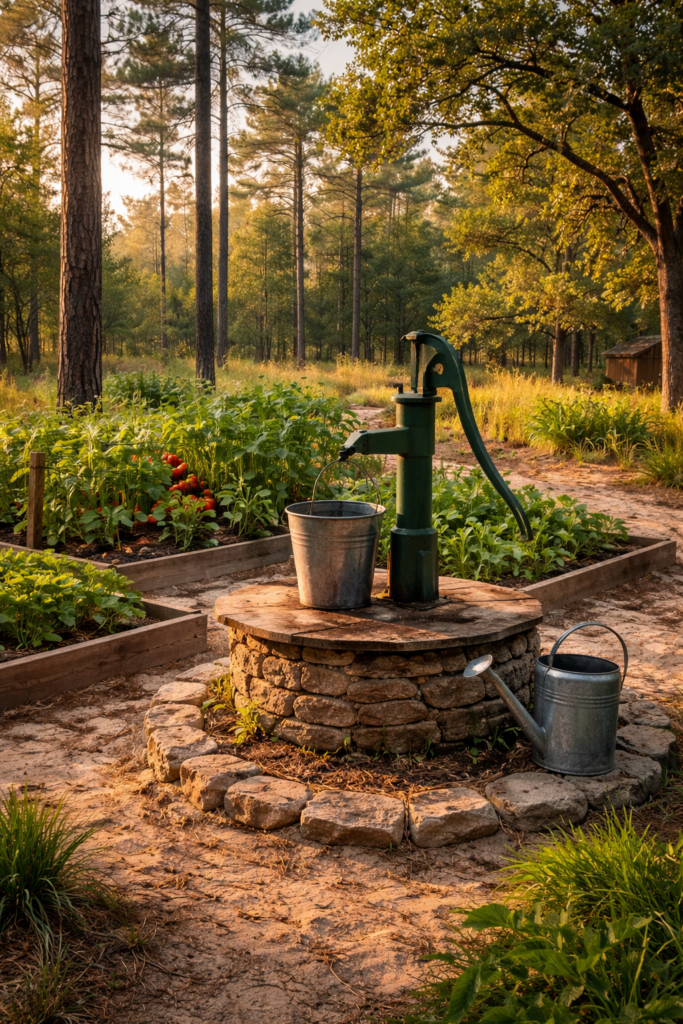
LAND
When people begin thinking about off-grid living, the first thing they usually talk about is land.
They look at acreage. They look at trees. They look for views. Mountains, meadows, forests, and privacy all capture the imagination.
But experienced off-grid builders tend to start somewhere else entirely.
They start with water.
The truth is simple and often overlooked by newcomers to homesteading: you are not really buying land. You are buying access to water that happens to come with land attached to it.
Without water, none of the rest of the off-grid dream works for very long.
A person can live without electricity for a while. Plenty of people cook on a camp stove and light their homes with lanterns when they first start building their off-grid homestead. People can also live in small spaces and make do with very simple shelter for a season.
But water is different.
You can survive only a few days without it.
And once you begin living on land instead of just visiting it on weekends, the amount of water you need increases quickly. Drinking water is only a small part of the picture. Water is used for cooking, washing dishes, bathing, cleaning tools, watering gardens, and caring for animals.
Plants need water. Livestock needs water. Even basic hygiene uses far more water than most people realize.
That is why hauling water almost always becomes the first major mistake new off-grid landowners make.
At first it seems manageable. You fill containers in town, load them into the back of a truck, and bring them to the property. On a weekend camping trip that works just fine. But when that becomes your normal life, the reality sets in quickly.
Hauling water takes time. It takes fuel. It takes effort. And it gets old fast.
Many people discover within a few months that what seemed like a temporary solution becomes expensive and exhausting. The novelty wears off quickly when you are hauling hundreds of gallons every week just to keep basic things running.
This is why experienced homesteaders often say that the most important thing to evaluate when buying off-grid land is not the view, the soil, or the trees.
It is the water.
A property with reliable water solves many problems before they start. A property without reliable water creates problems that are difficult and expensive to fix later.
There are several ways off-grid land can provide water. In many places a drilled well is the most common solution. In other areas, a natural spring may provide a steady source of water. Rainwater collection systems can also work well when paired with sufficient storage tanks and filtration.
Some properties even include surface water such as creeks or ponds, although these sources often require careful filtration and may not always be reliable during drought conditions.
No matter where the water comes from, three questions always matter.
First, is the water available year-round? A seasonal stream that dries up every summer will not support a permanent homestead.
Second, is the water drinkable, or can it be filtered and treated to make it safe? Water quality matters just as much as water quantity.
Third, what does the land do with water during extreme weather?
Some land that looks perfect during dry weather floods during heavy rain. Other land drains so quickly that wells struggle when the region experiences drought. Understanding how water behaves on a property is just as important as locating the source itself.
These realities often surprise people who are new to off-grid living. It is easy to fall in love with a piece of land because it feels quiet, private, and beautiful. But beauty alone does not support a homestead.
Water does.
Once you have reliable water, everything else becomes possible. Gardens can grow. Trees can be planted. Animals can thrive. A home can be built with confidence that the most basic requirement for life is already solved.
That is why the smartest off-grid builders reverse the normal order of thinking.
They do not start by asking, “Is this land beautiful?”
They start by asking a much more important question.
“Where does the water come from?”
Because in the end, land without water is just scenery.
And an off-grid homestead needs much more than a view.